English Crossword Puzzle
- 4.7
- Rating
- 5.00M
- Installs
- Free
- Price
 Analysis by App-foxy
I spent time with English Crossword Puzzle as a compact word game for Android, and my first impression was clear: it is built for people who want to practice English through familiar crossword mechanics rather than sit through a formal lesson. The puzzles are approachable, the game works offline, and the free entry point makes it easy to try during a commute, a quiet break, or a few minutes before bed. It is not trying to replace a full language course, but it can turn spare moments into useful vocabulary practice.
What makes it interesting is the combination of two purposes. You are solving clues for entertainment, but you are also meeting English words in context and checking whether you understand their meanings and spellings. That makes the experience more active than simply reading a vocabulary list. I found myself paying attention not only to whether an answer fit the spaces, but also to why a particular word was the right choice.
How the current game feels to use
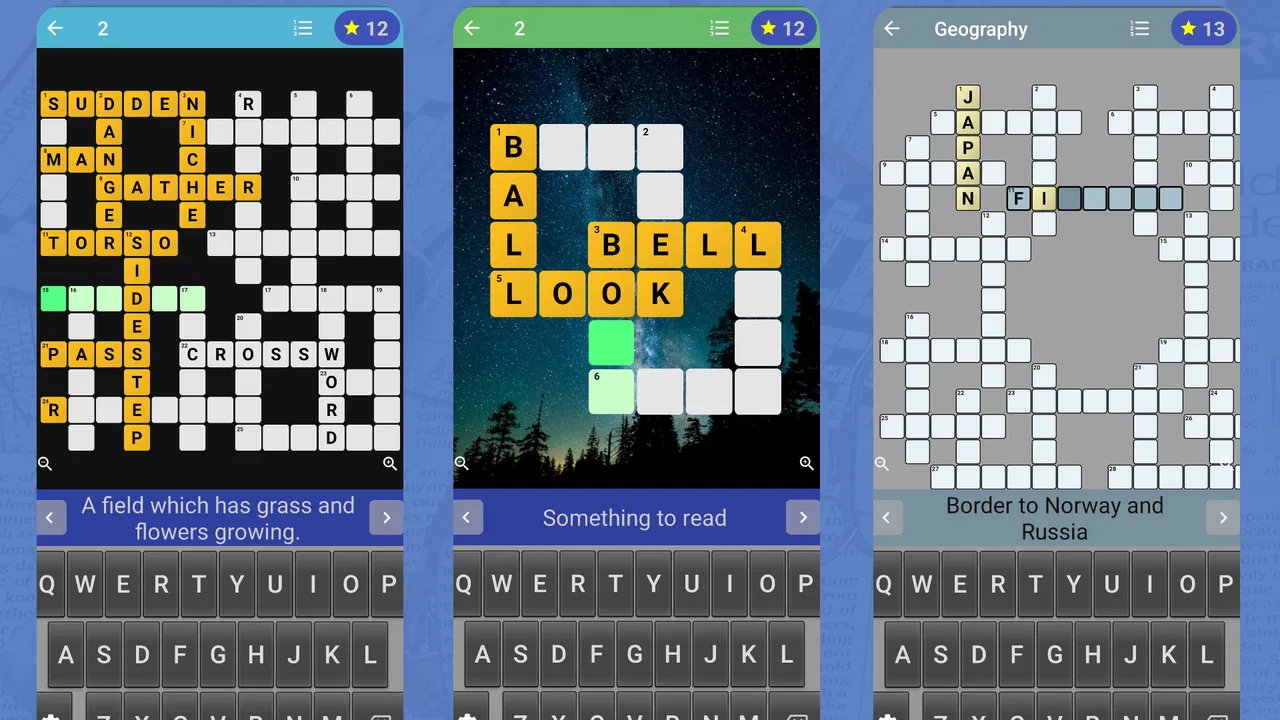
English Crossword Puzzle is a word game from Litera Games, and its presentation is centered on crossword solving rather than a large collection of unrelated mini-games. The store summary emphasizes easy levels for English learners, and that description matches the role the game fills best: a gentle practice tool for someone who wants English exposure without the pressure of a classroom exercise.
You May Also Like

 Blood Strike: 2.5 Anniversary
Blood Strike’s Loadouts Turn Every Drop Into a Tactical Gamble
A close look at Blood Strike’s custom loadouts: how fast access to signature weapons reshapes its battle royale rhythm, rewards preparation, and narrows the gap between fights.

 Pandora - Music & Podcasts
Pandora’s Music Is Easy to Start, but Harder to Recover
Pandora’s strength is its low-effort path from a seed to a station. Its weak spot is how much confidence it asks you to place in connection, setup, and quiet recovery.

 8 Ball Pool
 Is Built on Rivalries, Rematches, and Routine
A close look at the rivalries, rematches, shared routines, and unanswered safety questions that turn a quick pool match into a persistent mobile community.

 Samsung Music
’s Quiet Strength Is Playing What You Already Own
Its reach comes less from spectacle than from dependable access to a personal library. That simplicity is both the app’s strongest retention engine and its ceiling.

 AccuWeather: Weather Radar
AccuWeather Review: A Quick, Clear Forecast for Everyday Decisions
For everyday plans, the best forecast is the one you can understand quickly. AccuWeather makes rain timing, radar, and local conditions easy to act on, with a few trade-offs.

 Hill Climb Racing
Why Hill Climb Racing Still Turns Crashes Into One More Run
A tiny car, a bumpy hill and one more upgrade: Hill Climb Racing keeps resurfacing because its simple chaos makes every near-miss feel personal.
More From Our News Desk



The current version is 2.5.3, and the game supports Android 6.0 or later. That relatively broad system requirement is useful if you are using an older phone or tablet for study and do not want to reserve your newest device for a simple puzzle. The game has also been available since November 9, 2017, so it is not a brand-new experiment. Its long presence and audience size suggest that the basic idea has had time to settle, even though the experience remains deliberately straightforward.
Its audience is substantial: the game has passed five million installs, with an average rating of 4.7 from around fifty-nine thousand ratings and roughly two thousand eight hundred written reviews. Those figures do not guarantee that every learner will enjoy the clue style, but they do indicate that the simple format has connected with many players.
I would describe the difficulty as more welcoming than demanding, especially at the beginning. That matters for learners who know common English words but hesitate when spelling them. A crossword gives you several kinds of help at once: the clue provides meaning, the grid shows the answer length, and crossing letters gradually narrow the possibilities. Instead of being punished immediately for not knowing a word, you can often reason your way toward it.
That reasoning is the strongest educational feature here. If I encounter a word I only half recognize, the crossing answers give me a chance to test my guess. I can then remember the word as part of a small puzzle relationship rather than as an isolated translation. This is particularly useful for learners who understand spoken English reasonably well but need more confidence with written vocabulary.
A practical routine for learners
The best way to use the game is not to rush through every clue. I recommend solving the obvious entries first, then pausing on the uncertain ones instead of immediately treating the puzzle as a race. The first letters you place can reveal patterns in neighboring answers, and that makes the grid function like a built-in memory aid.
A useful routine is to keep a short note outside the game for words that were unfamiliar or easy to confuse. Write the word, its meaning in your own language, and a simple sentence you might actually say. The puzzle gives you recognition practice, but this extra step turns recognition into recall. I would not expect the game alone to build fluent vocabulary; paired with this small habit, it becomes much more valuable.
Another good approach is to replay your mistakes mentally later in the day. Crossword clues can be vague when you are still learning, and a word may become easier after you have seen it in another context. Because the game is offline, it fits well into a routine where you review words while traveling or waiting somewhere without relying on a stable connection.
Offline access is more than a convenient extra in this case. It changes where the game is practical. You can use it on a flight, in a basement with poor reception, or during a commute where you prefer to keep mobile data turned off. It also makes the game feel less demanding than many modern language apps that expect constant synchronization, daily notifications, or a continuing online connection.
Where it sits beside other word games
Compared with a traditional crossword publication, this game is more suitable for an English learner who needs accessible clues. A newspaper-style crossword can be rewarding for an advanced speaker, but it often depends on cultural references, wordplay, obscure vocabulary, or conventions that are frustrating when English is not your first language. English Crossword Puzzle is a better starting point if your goal is steady comprehension and spelling practice.
Compared with flashcards, the game gives you more context and a stronger sense of discovery. Flashcards are usually better for deliberate repetition because you can target a specific word list and review difficult items systematically. This game is better when you want practice to feel like leisure. The trade-off is that you have less control over exactly which vocabulary appears and how often a troublesome word returns.
It also differs from a structured language-learning course. A course normally organizes grammar, listening, speaking, and progression around lessons. This title concentrates on written words and clue solving. I would choose it as a companion for vocabulary exposure, not as my only English resource. If you need pronunciation feedback, conversation practice, sentence correction, or a clear study syllabus, another type of app will serve you better.
What the version history means for players
The current version number shows that the game has gone through multiple iterations since its original release, but I would be careful about reading more into that than the evidence supports. A later version can reflect maintenance, compatibility work, refinements, or other changes, and it does not automatically mean that the game has been transformed into a different product. In everyday use, the important point is that the current release remains recognizable as a focused crossword game for English learners.
For someone already using an earlier release, the practical question is whether the existing routine still feels familiar. In my view, the answer is likely yes: the core appeal remains the same kind of low-pressure puzzle solving, and the current version does not present itself as a radically different genre. That continuity is helpful if you already like the format and want to continue without relearning an elaborate interface.
For a new player, the long development history is reassuring in a modest way. The game is not presented as an abandoned one-off title, and the current release supports a modern enough installation range for many Android users. Still, I would judge it by the actual puzzle experience rather than by version numbering. A version label cannot tell you whether a clue feels natural for your level or whether the vocabulary matches your goals.
The game is free to install, which removes the biggest obstacle to testing it. It includes in-app purchases ranging from ninety-nine cents to seventeen dollars and ninety-nine cents per item. I would approach those purchases with a simple rule: first decide whether the free experience provides enough puzzles and practice for your routine, then consider spending only if the added value is clear to you. The presence of optional purchases means the game is not identical to a completely purchase-free study tool, so budget-conscious users should pay attention before confirming anything.
Its content rating is Teen. That is worth keeping in mind for families choosing learning games for younger children. The rating does not describe the game as a children’s preschool tool, and the intended experience feels more appropriate for teens, students, and adults who are comfortable reading English clues. For a young learner, I would try it together first and see whether the vocabulary and clue wording are suitable.
Small strengths that are easy to overlook
The first overlooked strength is how the crossing grid reduces the fear of making a mistake. In a vocabulary quiz, an unknown answer can feel like a dead end. Here, a partial answer can become solvable after you work on another clue. That makes the game useful for learners who are willing to reason from context but are not yet confident enough to answer every definition directly.
The second is its suitability for fragmented study. You do not need to prepare a lesson or find a quiet hour. A short session can still involve reading clues, recalling meanings, checking spelling, and noticing word patterns. I found that more realistic than promising myself a long study block that I would probably skip.
The third is the balance between entertainment and repetition. Because the activity is a puzzle, I was more willing to return to it than I would be to a plain vocabulary drill. That does not make every word memorable automatically, but it lowers the resistance that often comes with studying. If you already enjoy crosswords, this is a particularly natural way to add English practice to a hobby you understand.
There is also a useful distinction between solving and learning. Completing a clue correctly does not always mean you can use the word in a sentence. I recommend treating uncertain answers as vocabulary leads rather than assuming they are mastered. Look for the words you guessed from crossing letters, especially when the definition was unclear. Those are the entries most likely to need a second encounter elsewhere.
Where the experience falls short
The same simplicity that makes the game approachable can limit its value for advanced learners. If you already read English comfortably and regularly solve challenging crosswords, the easier material may not stretch you enough. In that situation, a more difficult crossword source or a specialized advanced vocabulary tool would probably offer better long-term challenge.
It is also not the right choice if your main goal is speaking. Solving a written clue can improve recognition and spelling, but it does not make you practice forming sentences aloud or responding in conversation. I would pair it with listening and speaking activities rather than expecting crossword success to transfer automatically to real-time communication.
Clue interpretation can occasionally be a source of friction for learners. A definition that feels obvious to a fluent speaker may have several possible meanings for someone still building vocabulary. The grid helps, but it can also encourage guessing based on letter patterns without fully understanding the word. When that happens, slow down and verify the meaning independently instead of celebrating the filled square as a completed lesson.
The offline design is convenient, but it also means the game is best understood as a self-contained practice experience. If you want live competition, social discussion around clues, synchronized progress across several devices, or a constantly changing online challenge, a connected word-game platform may suit you more. I would choose this one for independence and convenience, not for community features.
There is a similar trade-off with progression. A focused crossword game can be calming because it does not bury the activity under a complicated study system. On the other hand, learners who need visible curriculum milestones, detailed performance reports, or targeted review may find the format less organized than a dedicated language-learning app. The choice depends on whether you prefer a relaxed puzzle habit or a measurable course plan.
Who should install it
I would recommend English Crossword Puzzle to an English learner who already knows basic words, enjoys word games, and wants a low-pressure way to practice reading and spelling. It is especially suitable for someone who dislikes repetitive flashcards but still wants a reason to encounter vocabulary regularly. Students can use it as a break from formal study, while adults may appreciate having an offline activity that is more mentally engaging than scrolling.
It is also a good fit for crossword fans who are learning English and want clues that feel less intimidating than advanced publications. The crossing-letter system gives you a way to recover when your vocabulary is incomplete, which makes the game friendlier than many general-audience crossword alternatives.
I would skip it if you want a complete language curriculum, speaking lessons, pronunciation analysis, or advanced competitive crossword difficulty. I would also hesitate to make it the only resource for a child without first checking the content against that child’s reading level, especially because the listed age rating is Teen. In those cases, a structured course, a pronunciation-focused tool, or a more challenging crossword app would be a better primary choice.
What I would watch as the game continues
For future updates, I would be most interested in whether the developer continues to preserve the approachable clue design while giving experienced learners a reason to stay. A useful direction would be clearer separation between beginner-friendly material and genuinely challenging vocabulary, provided that such changes do not make the current experience less welcoming. I would also value improvements that help players turn difficult answers into lasting vocabulary rather than simply moving on.
Existing users should watch for whether updates keep the game stable on supported Android devices and whether the puzzle experience remains as direct as it is now. New users should focus less on the version number and more on a simple test: can you understand enough clues to enjoy solving, and do you feel motivated to look up the words that stop you? If yes, the game is doing its job for you.
After using it, my opinion is positive but specific. This is not a complete English course and it is not designed to satisfy expert crossword enthusiasts looking for maximum difficulty. Its value comes from making vocabulary practice feel manageable, portable, and pleasantly game-like. For learners who want a free, offline crossword habit rather than a full study program, it is an easy recommendation.
I would install it, try several sessions without buying anything, and pay attention to what kind of learning it actually gives you. If you enjoy solving clues and notice yourself remembering new spellings, keep it as part of a broader routine. If you need conversation, grammar, or systematic review, let another app handle those jobs. Used in the right role, English Crossword Puzzle is a simple tool with a genuinely useful strength: it gives you a reason to meet English words repeatedly without making every practice session feel like homework.
FAQs for English Crossword Puzzle
01What features does the English Crossword Puzzle app offer?
The English Crossword Puzzle app provides a variety of features to enhance your experience. It includes daily puzzles, a wide range of difficulty levels, and a hint system to assist when you're stuck. Additionally, it offers a timer for those who enjoy a challenge and leaderboards to compete with friends.
02Is the app suitable for beginners as well as experts?
Yes, the English Crossword Puzzle app is designed for all skill levels. Beginners can start with easier puzzles and use hints to learn as they go, while experts can tackle challenging crosswords. The app’s wide range of difficulty levels ensures that there’s something for everyone.
03Does the app require an internet connection?
The app can be used offline, making it convenient for situations where you don't have internet access. However, to access daily puzzles, updates, and leaderboards, a connection is required. This flexibility allows you to enjoy puzzles anytime, anywhere.
04Are there in-app purchases or ads?
The English Crossword Puzzle app is free to download and play. It does include ads, but users have the option to remove them through a one-time in-app purchase. This purchase also unlocks additional features, enhancing your puzzle-solving experience.
05Can I track my progress and compete with others?
Yes, the app includes a progress tracker and leaderboards. You can monitor your performance over time and see how you rank against other players. This competitive element adds motivation to improve your skills and complete puzzles more quickly.
Pros
- Variety of puzzles keeps gameplay fresh.
- User-friendly interface enhances accessibility.
- Daily challenges boost engagement.
- Offline mode available for travel use.
- Hints and tips aid learning new words.
Cons
- Ads can be intrusive during gameplay.
- Limited free hints without purchase.
- Occasional lag on older devices.
- Some puzzles feel repetitive.
- In-app purchases can be pricey.

English Crossword Puzzle
Gallery